
Growing Media
Due to the relatively shallow depth and limited volume of a container, growing media must be carefully amended to provide the appropriate physical and chemical properties necessary for optimal plant growth. Successful greenhouse and nursery production of container-grown plants largely depends on these properties. The growing media should be well-drained to prevent waterlogging and root rot, yet it must also retain enough water to reduce the frequency of watering. This balance ensures that plants receive the necessary moisture and oxygen to support healthy growth in a confined space.
Growing media components are classified as either organic or inorganic.
Organic components include materials such as peat moss, bark, coconut coir, rice hulls, wood fiber, and hydra fiber as new player. Inorganic components include materials like perlite, pumice, vermiculite, sand, hydrogel.
Each component can vary significantly in its source, structure, and how it is processed, aged, composted, and screened. For example, bark can differ greatly in its properties depending on these factors. Similarly, peat moss, particularly light brown, fibrous peat moss, has a porous structure and can hold up to 16 times its weight in water.
Physical Characteristics of Growing Media:
- Bulk Density: Refers to the weight of the growing medium.
- Water-Holding Capacity: The volume percentage of water retained by a saturated growing medium after it is allowed to drain.
- Air Porosity: The volume of pore space occupied by air after a saturated growing medium has drained.
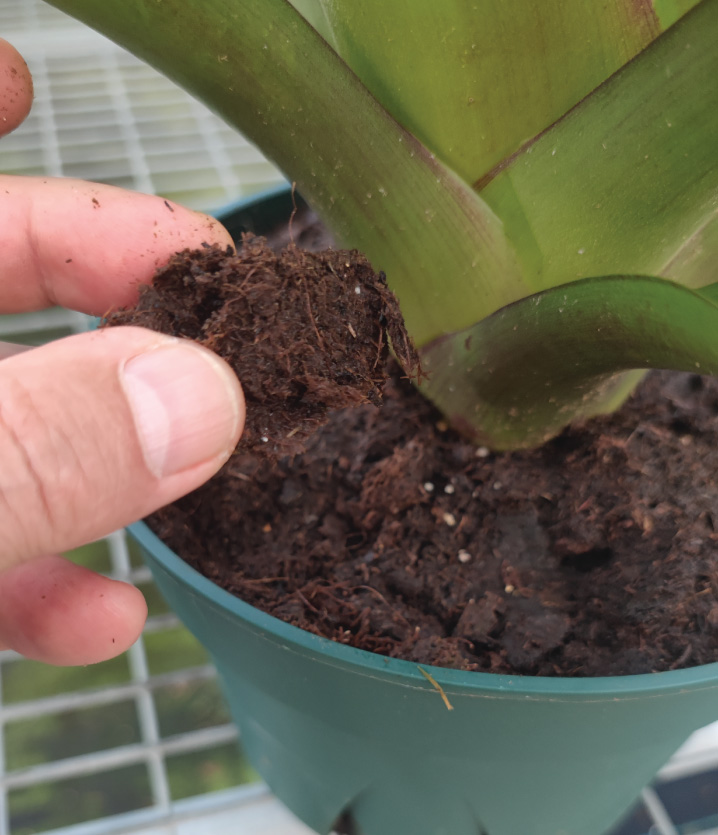
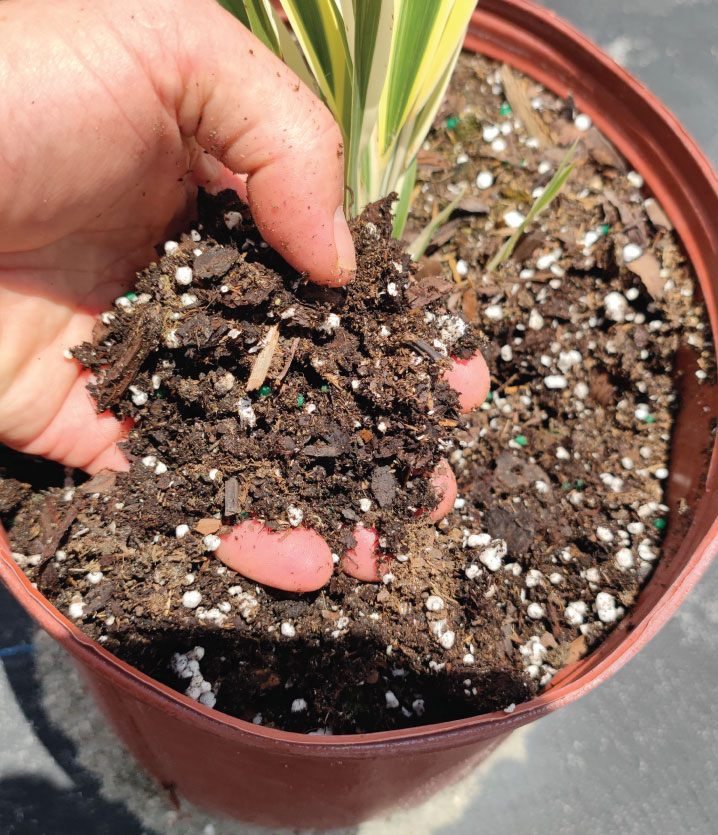
Peat-based growing media typically have low bulk density because they are primarily composed of Sphagnum peat moss, which also gives them a higher water-holding capacity. On the other hand, bark-based media are heavier and are good enough when high drainage and container stability are needed.
Chemical Characteristics of Growing Media:
- pH: Measures how acidic or basic a substance or solution is, which is crucial for plant nutrient availability.
- Electrical Conductivity (EC): Indicates the ability of soil water to carry an electrical current, providing an estimate of the nutrients available for plant uptake.
- Cation Exchange Capacity is a measure of a medium’s or soil’s ability to regulate the supply of cations to the plant. Cations are positively charged ions of minerals. Examples of cations include potassium (K+), calcium (Ca2+), iron (Fe2+), and others. Cation exchange capacity refers to a soilless medium or soil’s capacity to hold and exchange mineral nutrients.
Detailed table of growing media raw materials properties below:
Peat raw material and constituens 2024
1. Peat moss is known for its exceptional water-holding capacity, which makes it a popular component in growing media. It has a total pore space of up to 97%, although 82% to 85% is more typical. This high porosity allows peat moss to hold between 60% to 68% of its volume in water. Despite its high water retention, a typical sphagnum peat still maintains an air-filled pore space of 10% to 15%, which is crucial for providing oxygen to plant roots and preventing waterlogged conditions. This balance of water retention and air porosity makes peat moss an effective medium for supporting healthy plant growth in container environments.
2. pH. It is acidic, but can be easily adjusted by a number of liming materials if necessary.
3. Sphagnum peat has a C.E.C. of 90 – 140 meq/100g so it is able to retain mineral nutrients for later release and uptake by the crop.
Growing media electrical conductivity (EC) is a measure of the amount of salts present in the soil, which reflects the soil’s salinity. It serves as an excellent indicator of several important factors:
- Nutrient Availability: High EC levels generally indicate higher concentrations of soluble nutrients available for plant uptake, while low EC may suggest nutrient deficiencies.
- Nutrient Loss: Tracking EC can help identify areas where nutrients may be leaching out of the soil, which can lead to nutrient loss and reduced plant growth.
- Soil Texture: EC can also provide insights into soil texture, as soils with higher clay content tend to have higher EC due to their ability to retain more water and nutrients.
- Available Water Capacity: The EC measurement can give clues about the soil’s ability to hold and provide water to plants, which is crucial for maintaining optimal growing conditions.
Understanding and managing soil EC is vital for ensuring that plants receive the right balance of nutrients and water for healthy growth.
Cation Exchange Capacity (CEC) is an essential concept in understanding how soils and potting mixes hold onto nutrients. It is a measure of the soil’s ability to retain and supply cations—positively charged ions such as calcium (Ca²⁺), magnesium (Mg²⁺), and potassium (K⁺)—to plants. CEC is a crucial indicator of soil fertility, as it reflects the soil’s capacity to provide these vital nutrients.
- Organic Matter and CEC: Organic matter, such as humus, typically has a very high CEC, making it effective at holding onto and supplying nutrients. The CEC of humus can vary with soil pH; for example, humus has a CEC of about 200 at pH 8 but only around 120 at pH 5.
- Different Materials and CEC: Sphagnum peat moss, widely used in potting mixes, has a CEC ranging from 100 to 250, depending on its quality. In contrast, cocopeat (coconut coir) generally has a lower CEC, around 50. This means that peat moss is better at holding onto nutrients than cocopeat, although both are commonly used in horticulture for their other beneficial properties.
- Soil Composition: Soils with a high clay content and high organic matter content (like humus) typically have the highest CEC, which allows them to retain more nutrients and make them available to plants over time.
Leaching and Nutrient Loss:
- Low CEC Soils: In soils with low CEC and high sodium levels, a significant portion of the cations may be found in the soil water, rather than being held by the soil particles. These cations are highly susceptible to being leached or drained away with soil water, leading to nutrient loss.
- High CEC Soils: Conversely, soils with high CEC have a much lower percentage of cations in the soil water. These soils are less prone to nutrient loss by leaching, as they can better retain essential nutrients within the soil matrix.
Managing CEC is crucial for optimizing soil fertility and ensuring that plants have access to the nutrients they need for healthy growth.
Growing media should be well-drained to prevent waterlogging and root rot, while also retaining enough water to keep plants hydrated. Achieving this balance is essential to ensure that plants receive the necessary moisture and oxygen to support healthy growth, especially in the confined space of a container. Proper drainage allows excess water to escape, preventing the roots from becoming waterlogged, while the ability to retain sufficient moisture ensures that plants have a steady water supply between waterings. This combination of good drainage and adequate water retention is key to maintaining a healthy root environment and promoting robust plant development.