
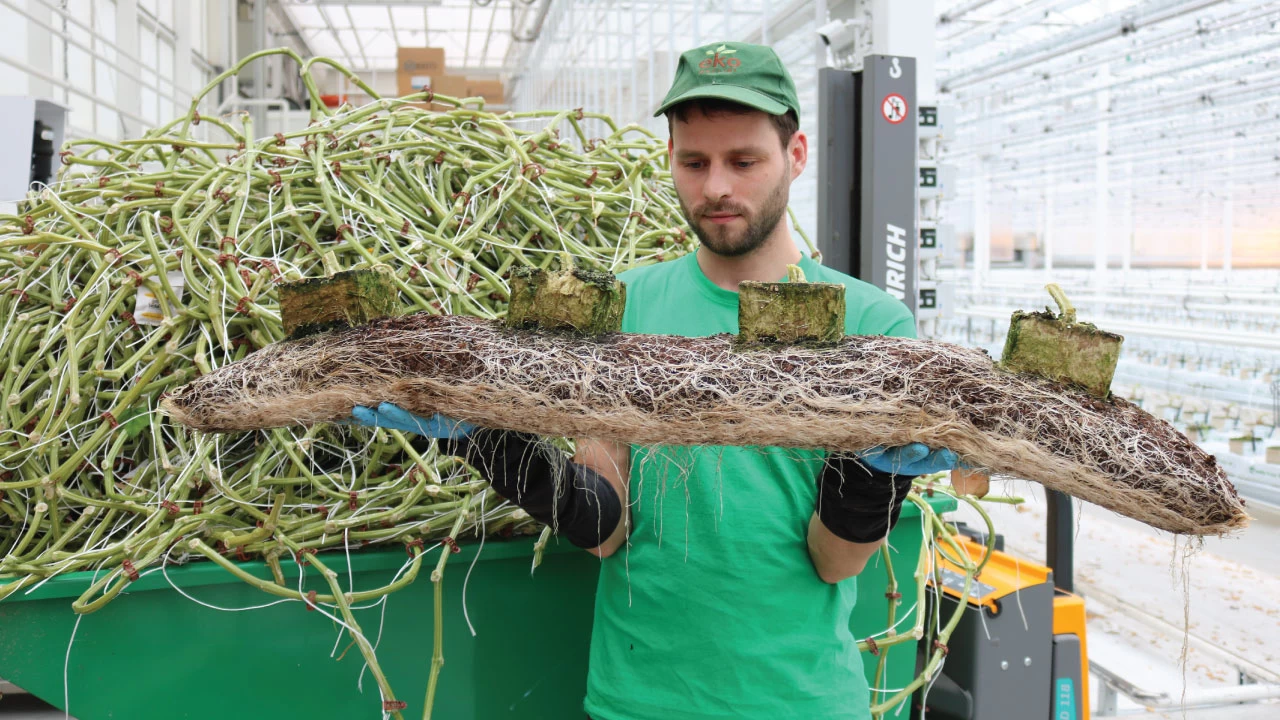
Specially developed peat substrate mainly from 7-15 mm fraction block peat, as it looks after 9 months after opening the growing bag in which greenhouse cucumbers grew. It is in perfect condition, no signs of compacting or poor drainage. The root system is perfectly developed to supply everything a fast-growing plant needs for high yields. By the way, a world record was achieved in the amount and weight of cucumbers grown per square meter of greenhouse area.
Growing in Florida
Horticulture is an important industry in Florida. This growing industry that annually brings billions of dollars to the economy. Numerous plantations grow a variety of crops that provide crops for thousands, even millions of residents, and provide employment for a large number of Floridians who are employed in agriculture to care for the plants.
Even on a hobby level, growing plants is important in this warm and humid state. A large part of the population has private houses with gardens, where you will definitely find many beautiful plants, from small to huge.
Florida soils
Because Florida lies entirely on the coastal plain, its soils are formed primarily from marine sediments. It has an extremely diverse range of soils – sand, silt, marl and rock plowed limestone. All of which are used in horticulture and are contrasting media for plant propagation. Even sandy soils have considerable variation in properties and conditions that can affect horticultural crops.
Challenges arise from high water tables and/or sandy textures, both of which limit plant-available water and nutrient retention. Flatwoods soils are prevalent throughout the state. This is a term applied to nearly level, poorly drained uplands. High water tables of flatwoods and marshes restrict root proliferation and commonly require artificial drainage. For most horticulture plants, these conditions would be too unsuitable. It would no longer be about fast growth and high yields.
Common growing media
When using soil mixtures from locally available raw materials, it is important to observe several indicators that greatly affect plant viability, and some of these characteristics cannot be corrected with adjustments over the time. We can adjust EC, pH, NPK and microelements, but we can’t improve air capacity and water retention capacity of the growing media after the specified crop has been already planted.
What do we know about peat?
Most here know what Canadian peat is. It has its own structure, which is determined by the harvesting method (milled peat/vacuum harvesting), some natural properties of species, the size of the peat particles, porosity, percentage distribution of fine and coarse fractions. Of course also the natural pH and EC level.
Well known benefits of the peat:
- High water holding capacity: Peat retains up to 20 times its weight in moisture, and releases slowly as plants need it.
- Aerate heavy soil: Spongy fibrous structure in peat moss helps to aerate heavy soils.
- Bind sandy soil: peat moss helps to improve the structure of sandy soil and improve moisture and nutrient retention.
- Reduce leaching: Exchange sites in peat moss reduces leaching of mineral nutrients added to the soil.
- Protect soil: Peat moss protects soil from hardening and adds organic material.
- Make better compost: Peat moss speeds the composting process, reduces odors and controls air and water in the compost pile.
- It is an ideal growing medium ingredient for vegetables, flowers, lawns.
Assuming that any peat substrate is universal, the following typical mistakes are made
1 .Wrong coarseness causes lack of air. Such issue is caused by using a substrate mixture that is too fine. That means there has been a lack of air for the roots to develop properly.
2. Wrong coarseness causes lack of water and nutrients. If the coarseness used is not really suitable for a certain purpose, it does not provide good support for the root system. For example, when plants are grafted, the substrate cannot meet the nutrient and water demands of the graft. The correct coarseness of the mix provided good support for the root system to develop.
3. Wrong substrate coarseness causes a lack of support. A peat mixture that drains too much for exact type of crop. Substrate mixture with inappropriate particle size. Incorrect particle size results in poor connection between the roots and the substrate. As a result, the plant is unable to absorb the nutrients and water it needs to develop a strong root system and grow into a healthy plant.
What is Baltic Sphagnum peat moss?
Sphagnum Peat Moss is a relatively young white peat, originating mainly from the Baltic States. Although Canadian and Baltic peat are largely similar and both are widely used in horticulture, some important differences do exist. Some of these differences are especially important to growers in Florida. As we have already written, the soil used for the preparation of substrates in Florida is quite special and it is not always able to cope with tasks such as root aeration, nutrient retention, water keeping capacity.
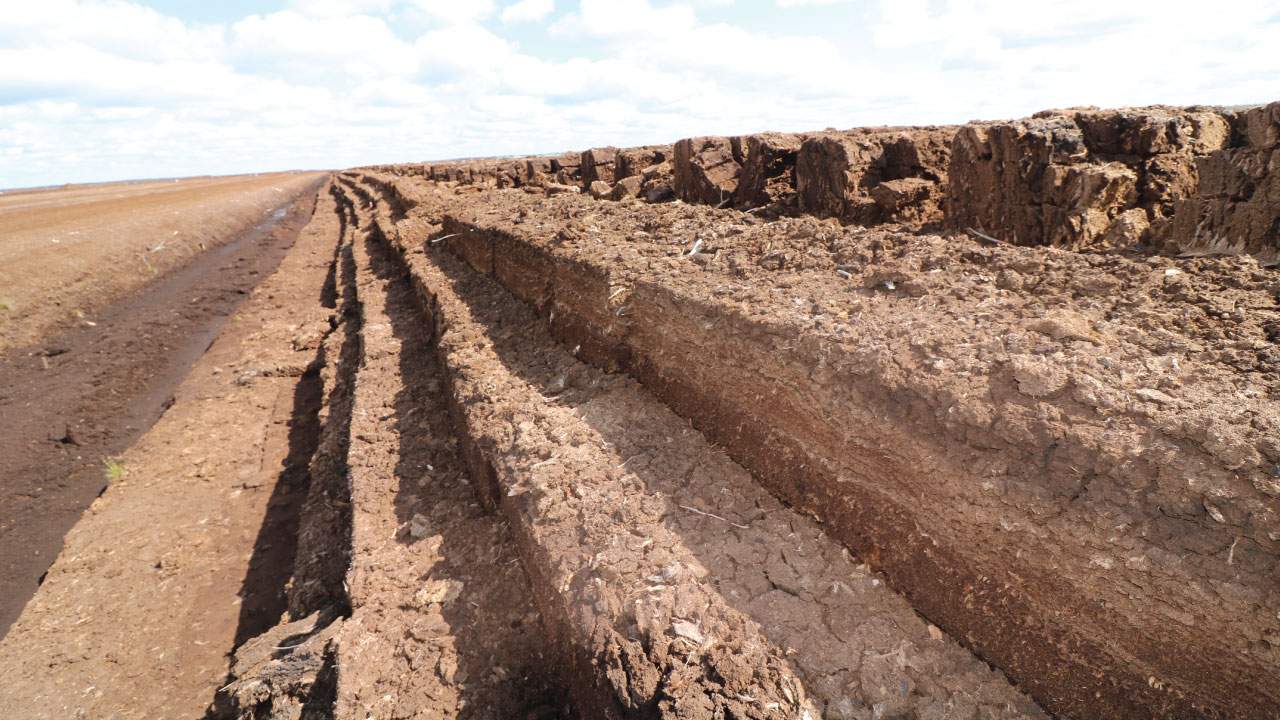
Block peat
Block peat is cutting from the Sphagnum bogs with special machines. Then drying naturally under the sunshine for 1/2-1 year. The peat sods are broken (not grind) into smaller pieces in a breaking miller and sorted into different fractions. This results in peat fractions that are very stable when used in substrate mixtures. The peat fractions provide a light mixture with an open structure mainly used in substrates for larger pot sizes or long-term crops, but not only.

One more thing: anti-compression properties
Most growing media look inspiring when you open the original package. Free-flowing particles, soft, light, loose, everything perfect. Maybe there is a surprise at the very beginning, when to start watering of plant. Surprisingly, the water does not want to soak into the soil, but runs away. This is a separate story for which there are several reasons, but all of them are the result of the insufficient quality of the substrate. However, the plant is planted or transplanted and the next most important goal is to see good growth results, well if in the long run. A series of surprises were revealed here. If the beginning itself was satisfactory, then the further course of growth is no longer so bright. Visible signs: the soil becomes compacted, water is absorbed very slowly or simply remains on the surface, the development of the plant slows down significantly or stunting appears altogether. When we remove the plant from the pot or the ground, we see that the roots have stopped developing or even a large part of them has died. The soil around the roots is compacted, hard, the roots do not feel good in it. It is clearly seen that air access to the roots is very difficult, the same can be said about nutrients. The situation is sad and the composition and quality of the growing substrate is to blame.
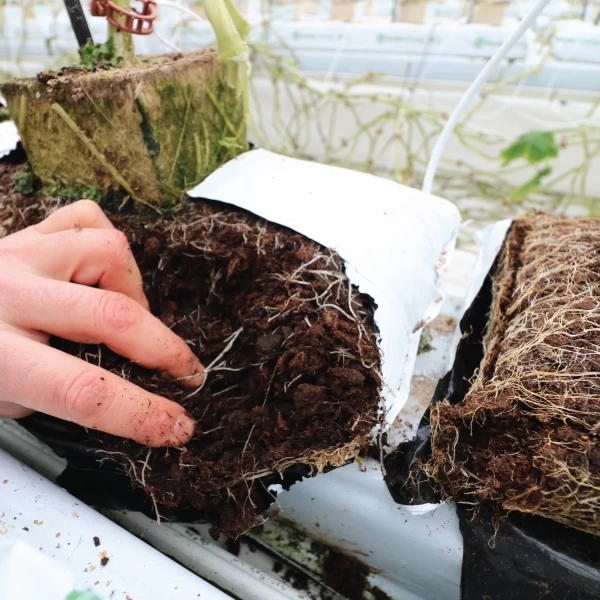
Opening the grow bag after 9 months of intensive cucumber growth in the greenhouse, we see that the peat particles are not stuck together, there are many freely growing root threads between them, the peat structure has remained porous, with plenty of space for both air and water. All these blockp peat particles can be freely shed from the roots, which indicates the excellent quality of the substrate. Daily monitoring of EC and chemical indicators showed very good soil buffering properties, stable pH.
Practical aspects for Florida conditions
Growing medium itself
Inorganic components
Inorganic components include perlite, pumice, vermiculite, sand, hydrogel, etc. Some of these components hold water on their surface, others hold water within their structure, while others hold little compared to other components. There are also components, such as perlite, that hold very little water also aeration properties are debatable.
Organic Ingredients
Common organic ingredients include compost, coconut coir, peat moss, bark, rice hulls, sawdust or any other appropriate, locally available material. These materials are lightweight, have high water-holding capacity and CEC, and some contain minor amounts of mineral nutrients. Some of these organic ingredients require screening or composting of local raw materials before use.
Compost
Because of the risks of using soils and the expense of importing peat moss, many tropical nurseries prefer organic compost as a green alternative to peat moss. For example, in Florida, a variety of native plants grown in biosolid yard waste compost were as large or larger than those grown in a peat-based growing medium. Composts are an organic component for any growing medium and enhance the medium’s physical and chemical characteristics by improving water retention and fertility, but can worsen aeration porosity. Compost quality can vary considerably between different source materials and even from batch to batch so growers need to always test new materials before general use.
Composting is the physical and chemical decomposition of organic materials caused by the digestive activities of insects, fungi, and bacteria. Raw materials for compost include any plant wastes like aquatic wastes such as aquatic weeds (such as the noxious weed water hyacinth) or fish parts from fish processing; animal wastes such as manures, feathers, and bedding; and wood wastes such as bark or sawdust. For organic nursery wastes may also be recycled through composting.
Peat Moss against compost
- low pH
- Does not compact
- Hold better water than compost
- Have uniform composition
- Poor in microorganism
- Environmentally controversial. Mined in a sustainable and controllable manner
- Contains few nutrients
- Does not have weed seeds
Proper mixing
We have done a lot of research on mixtures of peat with heavy, highly degradable raw materials such as compost, black peat, black soil and their effects on growth performance. Customers have requested substrates with higher water holding properties, requiring the addition of more black peat with a density above 300 kg/m3. We have completely abandoned compost and black soil, because their composition is always different, they can always contain pathogenic microflora or other impurities. When developing compositions, we can now safely say that the amount of high-density ingredients should not exceed 30% of the total volume. Otherwise, the physical properties of the substrate deteriorate rapidly.
Tips for Florida Growers
After becoming familiar with Florida’s soil composition and characteristics, as well as the more common challenges growers face, our recommendation is to work more with block peat, which dramatically improves soil quality and overall growth performance. In this way, local soil raw materials would be better used with higher and more predictable results.