
Why Coir is not Sustainable and Eco-friendly?
Coir
Coir is made from the outer husk of coconuts and is a waste product from the coconut industry.
Term coir is used interchangeably with the term coir pith and is sometimes called coir peat, coir dust, coir meal or coco peat.

Time and human resource intensive industry
Producing a good-quality coco substrate is an intensive process that takes months. To be able to use the product as a growing medium, the substance derived from the coco husks needs to be aged, washed, treated and rinsed. If this process is not carried out, or not carried out correctly, there is a risk of lacklustre growing results or potassium or calcium deficiencies.
Thanks to cheap labor, it is possible to obtain enough coconut coir to compete in horticulture industry. This is heavy manual work that cannot be completely replaced by automated equipment.
Worker Health
The whole process is very dusty and creates an unhealthy environment.
Conclusions: We conclude that coir work induced nasobronchial allergy and pulmonary function abnormalities. In absence of CT scan and bronchial challenge testing it may be inappropriate to label coir work as occupational hazard.(see full article).
Processing Coir Pith
Creating coir pith requires more than just physically separating the fiber. Once the coir is freed from the fiber it goes through a maturation process to stabilize the product and this can take up to 6 months. During this process salt, tannins, and phenolic compounds are removed. It is buffered, washed and calcium nitrate is added to displace sodium and balance the pH.
This process requires input chemicals and it produces waste products.
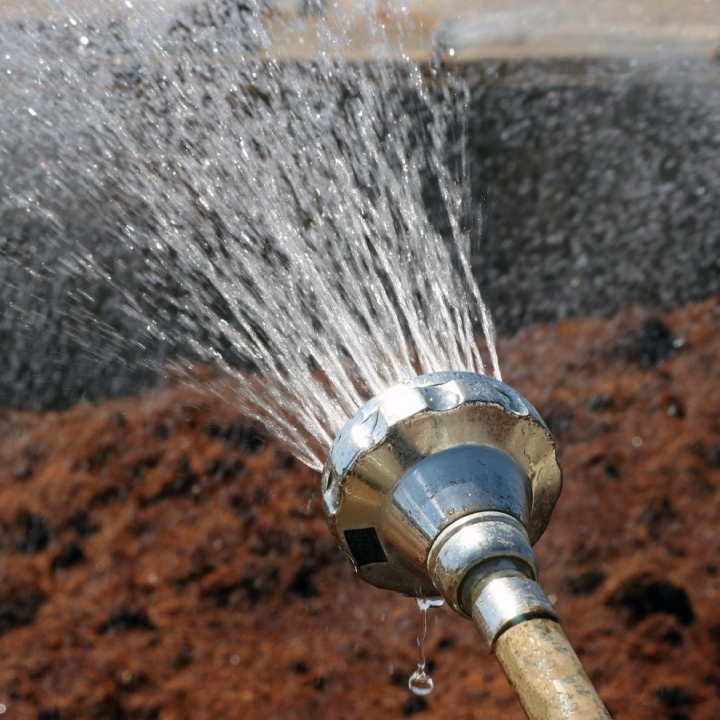
Buffering of coconut fiber is a chemical process consisting of replacing sodium and potassium with calcium, washing away excess waste.
Coir tends to have high levels of potassium and low levels of calciu.
1. Washing in fresh water, dragging a large part of the salts by dissolution
2. Chemical buffering
3. Second washing in fresh water, dragging by leaching a large part of the salts resulting from chemical buffering.
Even after this process, the decomposition of coconut organic matter releases sodium salts, so liquid fertilizers for coconut carry a calcium reinforcement in the formula so that there is always available calcium. An excess of fertilization could lead to an excess of calcium, which would produce a chemical block of iron, the result of which would be a radical stop in the plant’s growth and severe deficiencies in a short time. If this occurs, the plant should be spray with chelated iron and the EC level should be lowered below 1 mS for one or two irrigations.
Water Consumption
Processing coir requires a significant amount of water and in some areas like India, water is already in short supply. It takes 300 to 600 liters of water to wash one cubic meter of coir pith. The result is polluted water that impacts the environment.
To understand why they require so much water to rinsing the fibers to get out any accumulated salts. Coconut trees are capable of ‘drinking’ sea water because they have developed the ability to concentrate excess ions in the areas surrounding the cells that give the appearance of a high interior plant EC.
Coco pith processing plants in India are located in regions that suffer from water scarcity.
The important considerations for a correctly designed coco media for use in growing includes:
- Correctly handled coco of a consistent quality in both chemistry and physical structure.
- Properly aged to develop peak efficiency and quality of the product.
- Correctly balanced by buffering designed for the characteristics of individual batches of ready product.
- The availability of a nutrient designed to both feed the plant and continue to control and adjust the continuously decomposing coco medium.
Runoff water from cleaning the coco pith may contain levels of sodium, potassium, and physical contaminations that can have a harmful affect on surface water, groundwater, and soil.
Incorrectly sterilizing the coco by harsh steaming or toxic chemicals destroys the characteristics of the product. Not rinsing before packaging, or poor rinsing (too little or bad water) leaves behind high salt levels. Failing to properly buffer leaves big holes in the chemistry of the medium. Green or old coco is equally problematic and inconsistent in the way it is built and what the end results will be from wildly fluctuating EC and pH to rapidly changing and poorly built structure. Salts are given off all the time (such as Sodium, Potassium, and Chlorine) and must be removed or their effects neutralized. Much goes into the successful application of using coco as a growth medium.
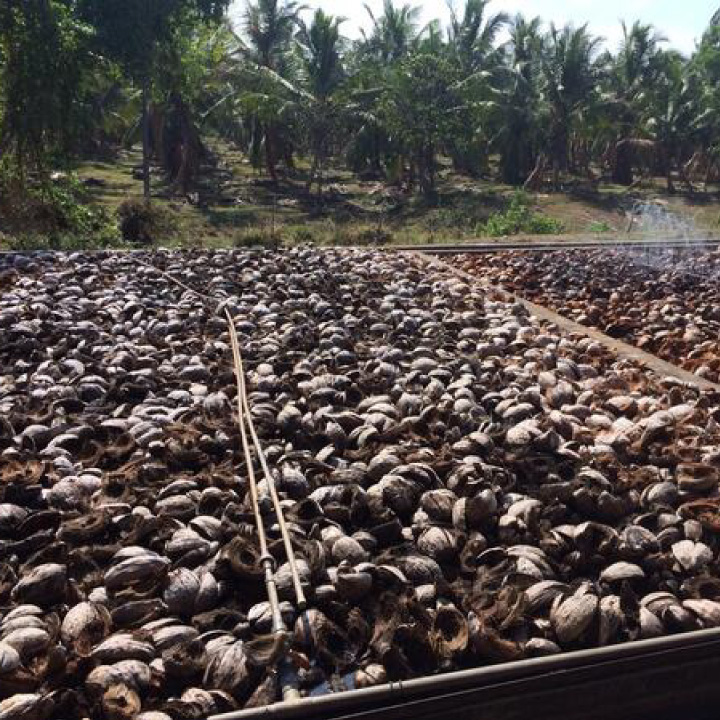

Coco is susceptible to contamination with (tropical) weeds or human pathogens, or it could become mixed with coco that has not yet been aged or other substances such as sand. Any of these impurities could cause problems when the product is used for growing.
Cows roam freely in India, and that can be a problem for coconut coir manufacturers, as coco coir can easily be contaminated with animal manure. Fresh water is used to extract fiber from ripe coconuts. However, if the coconuts are not fully ripe, they are then processed with brine, which can cause high salt levels in the coir.
While making coco pith uses waste products from the coconut industry, it also creates water pollution, greenhouse gas emissions, air pollution, soil pollution, marine pollution, and not to mention ethical working practice issues.
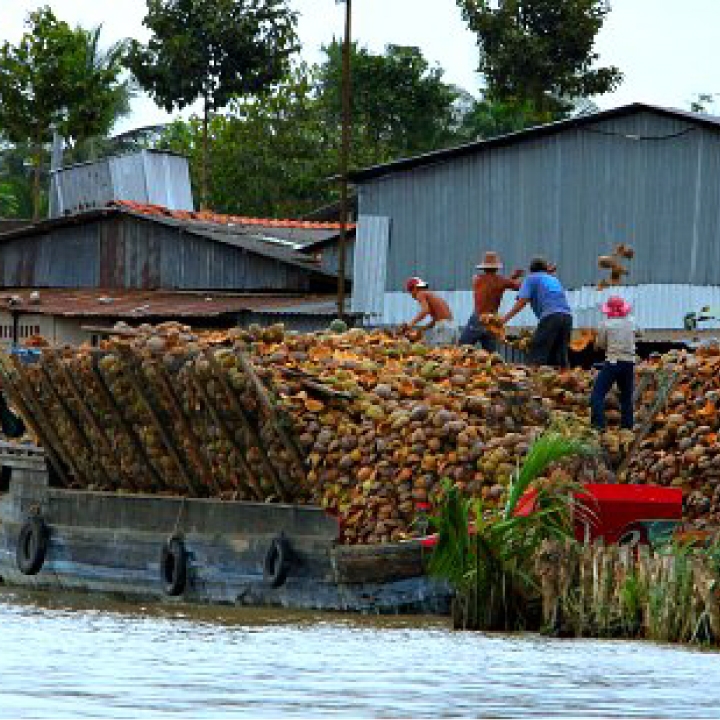
In “Achieving environmentally sustainable growing media for soilless plant cultivation systems” review published in ScienceDirect, the authors wrote, “…coir is often used as a peat replacement in Europe because it is perceived to be a more sustainable option. In terms of its impact on climate change, this is probably the case; but when impacts of its production are considered in terms of ecosystem quality and human health, it performs less favourably than peat.”
But not everyone believes that coir is as sustainable, nor as eco-friendly as it claims to be. Robert Pavlis at <em>Garden Myths</em>, believes that coir has been overhyped in this regard. Coir requires significant amounts of processing that uses lots of valuable water, which is already a limited resource in India, and leaves the water polluted after processing.
The myth of the very high water absorption capacity of coconut fiber
Water Absorption
Despite reports that coir has a greater water holding capacity, sphagnum peat moss holds 10 to 20 times its weight in water, while coir only holds an average of 8 to 9 times its weight. Peat and coco coir products also come in varying textures which can affect their ability to hold water.
Peat moss soaks up to 20 times its own weight in water and releases that water very slowly. If you don’t water your plants very often, they will likely survive on the water that is stored in peat moss. While being acidic may be a disadvantage in cultivating many plants, it can be an advantage if you water your plants with tap water, which is often alkaline. Peat moss is somewhat less expensive than coco coir.